

Why every startup needs an AI product Strategy in 2025-Codesuite
Oct. 31, 2025
807

Table of Contents
Recent data from AmplifAI's 2025 research shows a striking pattern in the business world that 65% of companies have doubled their generative AI adoption between 2023 and 2024. Even more compelling, organizations leading in AI integration are achieving $3.70 in return for every dollar invested.
These numbers tell us something important that AI has moved beyond experimental technology into a core business strategy that's delivering measurable results. If you're running a startup and AI isn't part of your product strategy, you're missing opportunities that your competitors are already capturing. The good news is that building an AI strategy doesn't require a PhD in machine learning. It requires understanding what works, what doesn't, and how to apply AI in ways that create real value for your business.
In this article, we'll explore why AI product strategy matters for startups right now, what mistakes to avoid, and the proven approaches that successful companies are using. You'll learn about the four essential elements every AI strategy needs, see real examples of businesses getting measurable results, and discover where smart startups are investing their AI budgets.
Why Speed Matters More Than You Think?
The education technology company Chegg offers a clear example of what happens when businesses move too slowly on AI. For years, Chegg was the go-to platform for students seeking homework help. When ChatGPT launched and provided students with instant, personalized assistance at no cost, Chegg's market value dropped by approximately 90%. This was a complete disruption of their business model, happening in a matter of months rather than years.
According to Fluvio Marketing's 2025 research, 88% of product marketing leaders expect AI usage to grow significantly in their organizations. However, only 15% have deeply embedded AI strategy into their operations. Let us have a look at some stats related to the use of AI.
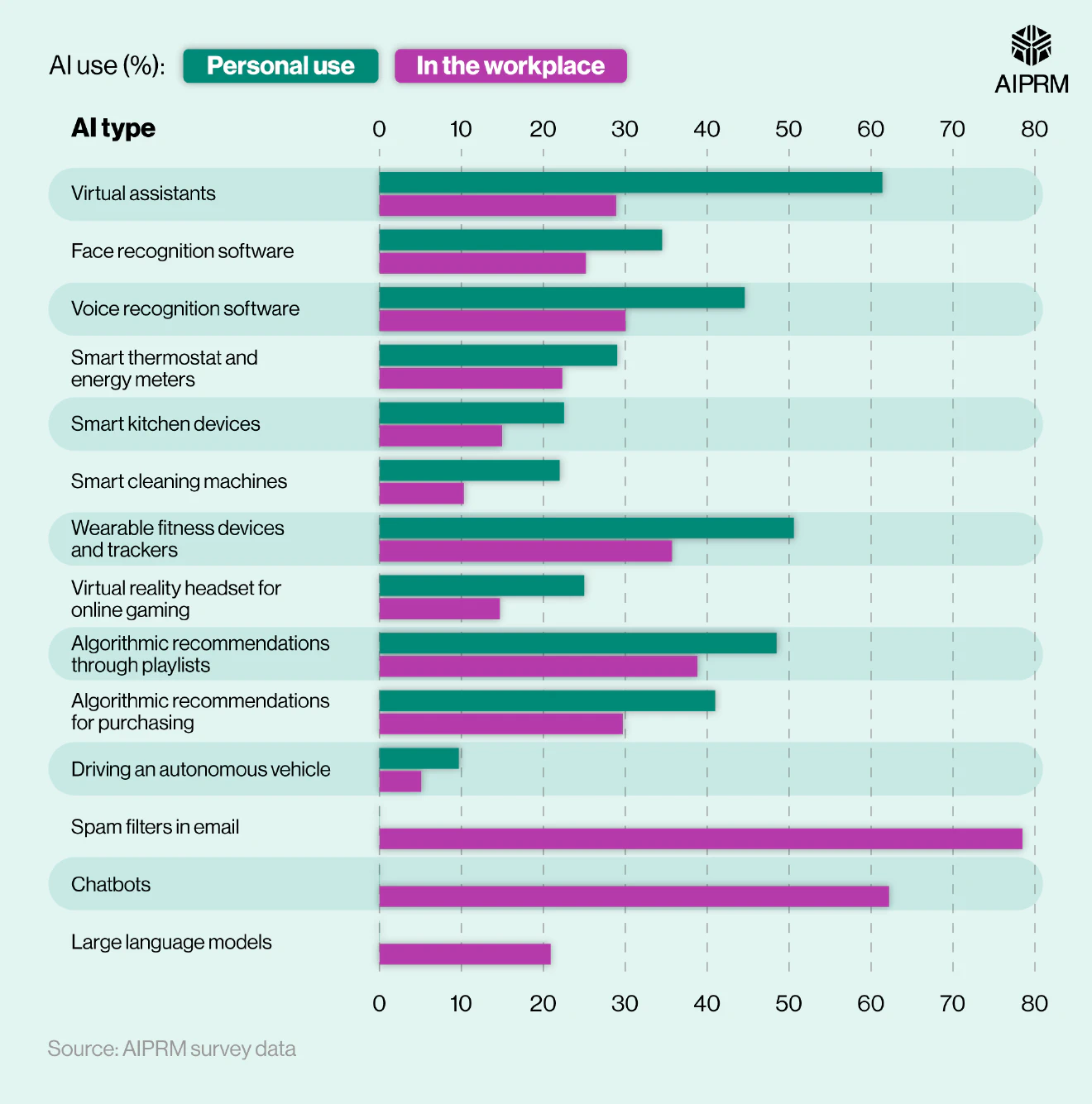
AI technology is developing at an unprecedented pace. Products and features that seem innovative today can become standard offerings within six months. Companies that wait to develop their AI strategy are essentially gambling that this rapid change won't affect their market position. This gap between awareness and action represents a significant opportunity. Startups that develop comprehensive AI strategies now can establish competitive advantages before their markets become saturated.
Why Most Startups Get AI Wrong
Many founders follow a similar path when first exploring AI. They discover an AI API, integrate it into their product, and see immediate results. The initial experience can be impressive, suddenly their application can generate content, answer complex questions, or create images. This approach often leads to two critical challenges that can threaten a startup's viability.
Cost management
The first challenge is cost management. Traditional software operates on a model where serving additional users adds minimal expense. AI applications work differently. Every query, generation, or interaction incurs real infrastructure costs.
Startups that experience rapid user growth without proper cost planning can face unexpectedly high cloud computing bills. A single viral moment that brings thousands of new users can transform from a celebration into a financial crisis if the unit economics haven't been carefully structured.
Commoditization
The second challenge is commoditization. When a product functions primarily as an interface to a third-party AI model like Chat-GPT, it faces a significant competitive vulnerability. Competitors can replicate the core functionality quickly, often within days or weeks. Numerous startups have invested months in development, only to see similar products emerge almost immediately. Without distinctive advantages such as proprietary data, superior user experience, established customer relationships, or unique integrations, maintaining market position becomes extremely difficult. The barrier to entry is low, which means differentiation must come from elements beyond just AI model access.
What Actually Works?
Let's talk about what successful AI startups are actually doing. There are four things they get right, and you need all four.
First, you need data that nobody else has. This is your secret weapon. Maybe it's information about how your customers behave, or insights from your specific industry, or data you've been collecting for years. When you feed this into AI, your product gets smarter in ways your competitors can't copy. Perplexity, the search engine startup, does this brilliantly by combining their own retrieval system with AI, which saves them millions in costs and makes their results better than just using a plain AI model.
Second, establish economic efficiency from the start. Successful startups prioritize cost management as a core component of their AI strategy. This involves using less expensive AI models for straightforward tasks, implementing caching systems to store and reuse responses to frequently asked questions, and creating intelligent routing that assigns tasks to appropriate model tiers based on complexity. These practices create the foundation for sustainable growth rather than rapid fund depletion. Companies that build cost-conscious architectures from the beginning can scale without facing the financial pressure that forces difficult decisions later.
Third, focus on genuine user value. AI implementation should address specific user needs rather than serving as a technology demonstration. Effective AI features save users time, increase their revenue, or solve persistent problems they encounter regularly. Products that incorporate AI without clear value propositions often struggle to retain users, regardless of technical sophistication. The most successful applications integrate AI in ways that become essential to user workflows, creating natural product stickiness.
Fourth, implement monetization early in the product lifecycle. While free tiers can drive initial adoption, AI applications face unique cost structures that make extended free access financially unsustainable. Mid journey provides a relevant example, the image generation platform experienced strong demand but found that free users generated substantial GPU costs. The company introduced paid subscription plans relatively quickly, which stabilized their business model and enabled continued growth.
What Real Businesses Are Achieving with AI
Let me share some examples that aren't about billion-dollar companies. These are regular businesses that got AI right.
There's this e-commerce shop that added AI recommendations to their website. Nothing fancy—just smart suggestions based on what people bought and browsed. In six weeks, people were buying 15% more per order, and 12% more customers came back to shop again. They got their money back in 45 days. That's the kind of real-world impact that actually matters.
Or take this marketing agency that used AI to handle their boring paperwork and client reports. They saved almost a full day of work every week, which meant they could bill for 20% more actual marketing work. Their clients were happier because everything was faster and more consistent. It's not sexy, but it's real money in their pocket.
What Smart Startups Are Investing In?
According to a16z's AI Application Spending Report, startup AI budgets follow a clear pattern. Approximately 60% of spending goes toward horizontal tools, applications that can be used across the entire organization to improve overall productivity. The remaining 40% is allocated to vertical applications designed for specific business functions such as customer service, legal operations, or technical support.
The highest investment categories include generative content creation tools, AI-powered coding assistants that accelerate developer workflows, automation platforms for repetitive processes, and customer service AI systems. Each category represents direct returns either through revenue generation or operational cost reduction, making them measurable investments rather than speculative technology adoption.
|
What Startups Buy |
How Much |
What It Does |
|
Tools for everyone |
60% |
Makes the whole company faster |
|
Specialized tools |
40% |
Solves specific department problems |
|
Content creation |
A lot |
Cranks out content faster |
|
Coding helpers |
A lot |
Developers build more |
|
Customer service AI |
Some |
Handles support questions |
What's Coming in 2025 and Beyond?
Successful startups are increasingly adopting AI-native architectures rather than retrofitting AI capabilities into existing products. This fundamental shift enables smaller teams to achieve output levels that previously required much larger organizations. Modern AI applications are evolving beyond single-function tools into systems that automate complete workflows, handling complex processes from start to finish with minimal human intervention.
The democratization of AI technology represents both an opportunity and a challenge for startups. As AI capabilities become accessible to broader audiences beyond technical specialists, potential market sizes expand significantly. However, this accessibility also lowers barriers to entry, intensifying competitive pressure across nearly every sector. Companies that establish strong positions now through proprietary data, superior user experience, or strategic partnerships will be better positioned as markets mature and competition increases.
Conclusion
Building an AI product strategy can feel overwhelming, but you don't have to figure it out alone. Codesuite helps startups move from ideas to implementation quickly and correctly.
We provide the infrastructure, compliance support, and strategic guidance that growing startups need. Whether you're in fintech, healthcare, or any other industry, we help you integrate AI models efficiently while keeping costs under control. Our team works with you to build features that create real competitive advantages, not just copy what everyone else is doing.
The most successful startups in 2025 treat AI as central to their business, not just another feature. Codesuite gives you the tools and expertise to do exactly that, building products that work, scale sustainably, and stand out in competitive markets.
Ready to build your AI product strategy the right way? Codesuite is here to help you succeed.